


Solutions
Smart Lock Systems for Railway Infrastructure
With the deepening of urbanization, high-speed railroad is developing rapidly as an important hub of modern transportation, and the management

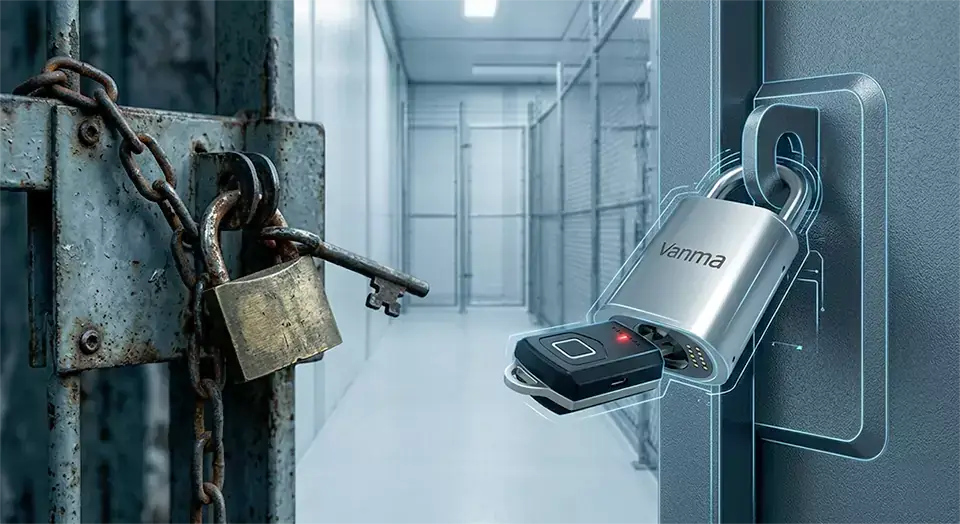
When an Iranian drone aggressively approached the USS Abraham Lincoln in the Arabian Sea in early 2026, the U.S. Navy’s response was immediate, layered, and fully documented. F-35C was scrambled, the threat was neutralized, and a complete operational record was generated in real time. Full authorization visibility. Zero gaps in the access control audit logs. Complete chain of custody for every decision made during the incident.
That level of discipline around access, authorization, and accountability doesn’t happen by accident. It’s the product of decades of physical security doctrine built specifically for environments where the cost of a single access control failure is catastrophic. The U.S. Department of Defense codifies this in DoD 5200.08-R, a regulation that covers every aspect of physical security across DoD installations — including, specifically, requirements for secure locking systems, credential management, and audit trails at every access point.
Here’s the uncomfortable truth for industrial facility managers: most of what that regulation mandates is absent from the average factory, prison, power plant, or government data center. Not because the technology doesn’t exist — it does, and it’s more accessible than it’s ever been — but because nobody has ever drawn the comparison clearly enough to make the gap obvious.
This article draws that comparison. According to HID’s 2024 State of Physical Access Control Report, which surveyed over 1,200 security professionals worldwide, manufacturing and industrial was the single largest sector represented — and yet only a fraction of those facilities operate anything close to a genuine high security facility lock system. The military solved this problem. Industrial operators can too — and the path is shorter than most people think.
It’s easy to assume that military security is just regular security with more guards and bigger fences. That’s not what it is. The discipline that protects a carrier strike group or a weapons depot is built on a specific set of principles that are systematically applied at every level — from the perimeter gate down to the lock on an individual equipment cabinet.
DoD 5200.08-R defines physical security as the combination of “physical protective and security procedural measures” with “active or passive systems, technologies, devices, and security personnel” — and it explicitly lists “secure locking systems, containers, and vaults” as core components of that combination. This isn’t guidance. It’s a minimum standard, enforceable across every DoD installation worldwide.
In most commercial and industrial security contexts, “good enough” is implicitly the standard. The lock is there. The key is somewhere. If something goes wrong, we’ll figure it out. That’s not cynicism — it’s just the reality of how security gets treated when it’s not the core business. The military operates under a different assumption: that access control failure will eventually be tested, and that the consequences of failure are unacceptable. Every element of the system is designed with that assumption baked in. Industrial facilities that handle dangerous materials, sensitive data, restricted assets, or high-value equipment face similar stakes — they just don’t always design their security with the same starting assumption.
A GAO audit published as GAO-19-649 examined how DoD installations were actually using Physical Access Control Systems (PACS) across six active-duty U.S. military sites. Even within the military — where the standards are explicit and mandatory — the audit found meaningful gaps in how PACS were being monitored and maintained. If DoD installations with dedicated security staff and formal compliance requirements struggle to execute access control doctrine consistently, it tells you something important about what happens in industrial environments where security is a secondary function and physical access to locks often still means mechanical keys.
Most industrial facilities sit somewhere in a spectrum between “purely mechanical locks with no record of anything” and “some electronic access at main entrances but mechanical locks on everything else.” A genuine high security facility lock system — one that meets anything close to military access control industrial standards — is relatively rare outside of government and defense-adjacent environments.
| Security Requirement | Military Standard (DoD 5200.08-R) | Typical Industrial Site |
|---|---|---|
| Access logging | Mandatory at every access point | Usually absent beyond main entrance |
| Credential revocation speed | Immediate, system-wide | Requires physical key collection or lock change |
| Time-limited access | Standard for all non-permanent staff | Rarely implemented at lock level |
| Dual authorization for high-risk areas | Required for sensitive/restricted zones | Ad hoc, if at all |
| Audit trail integrity | Tamper-evident, stored independently | Nonexistent in mechanical systems |
| Key/credential uniqueness | Individually assigned, non-transferable | Often shared or copied |
| Offline operation | Maintained under all conditions | Variable — many systems fail without network |
The table above isn’t an indictment of industrial operators — it reflects the tools that have been available and the priorities that have historically been set. But as threats to industrial facilities grow more sophisticated and regulatory requirements become more demanding, the gap between military standards and current practice is becoming harder to justify.
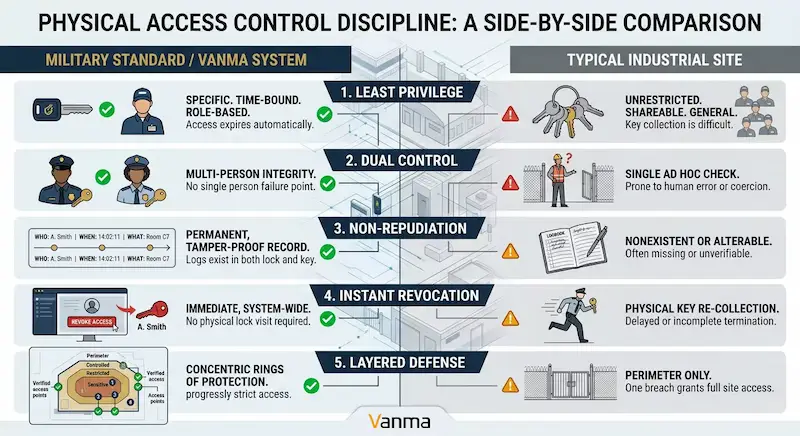
You don’t have to deploy a full DoD-grade physical security program to close most of the gap. The three principles that deliver the most protection per unit of operational change are also the three that translate most directly into available lock technology.
In physical access control, the principle of least privilege is simple: every user receives a unique electronic credential programmed to unlock only specific doors during authorized timeframes. Unlike shared master keys or pin codes known by multiple employees, each credential is directly tied to an individual’s identity for complete accountability.
In a high security facility lock system that implements this correctly, a contractor arriving on site for a specific maintenance window gets access to one area, for a defined period, and that access expires automatically when the window closes. They don’t need to return anything. The access just stops working. If the maintenance runs long, an administrator extends it with a few clicks — the worker doesn’t need to come back to an office, and no one needs to handle a physical key.
This one tends to get underestimated until the moment it matters — which is usually after an incident, when someone asks exactly what happened and when. In a facility running mechanical locks, the answer to “who opened this cabinet at 2 AM on Tuesday?” is almost always “we don’t know.” That’s not just an operational problem; it’s a liability problem. In regulated industries — nuclear, chemical, pharmaceutical, financial — it can be a compliance problem too.
A defense-grade physical security approach treats every access event as a permanent record. The record contains infomation about:
That data lives in both the lock and the key, independently, so it survives even if the central management system is temporarily unavailable.
Mechanical key systems have no revocation mechanism that doesn’t involve physically collecting the key or changing the lock. In an environment with high staff turnover, contractor rotation, or any kind of personnel security concern, this creates a persistent vulnerability. The only way to be certain that a former employee’s key no longer works is to change every lock that key opened — which is expensive, disruptive, and often simply doesn’t happen on the timeline it should.
Military access control doctrine addresses this with a non-negotiable requirement: credential revocation must be immediate and must not require physical intervention at the lock. That’s the standard. It’s achievable with current lock technology. Most industrial facilities just haven’t implemented it yet.
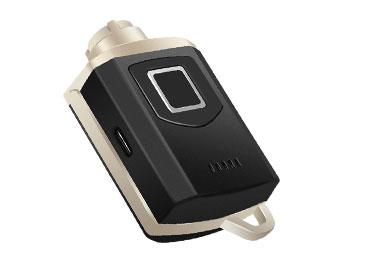
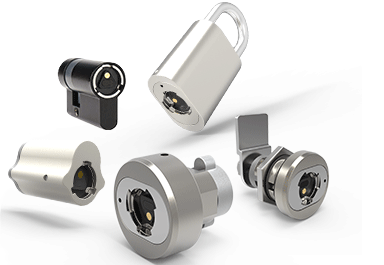
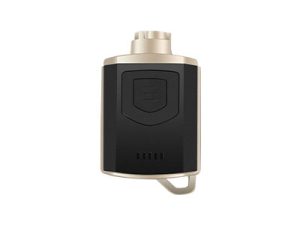
Engineered for harsh, high-stakes environments where traditional hardware fails, the Vanma passive electronic lock system delivers uncompromised physical security and strict accountability. Today, Vanma’s wire-free access control solutions protect critical infrastructure across 30+ countries—including correctional facilities, nuclear power plants, government data centers, and high-security industrial sites.
AES-256 encryption is the U.S. government standard for protecting classified SECRET-level data and defense communication systems. When integrated into a high-security smart lock system, AES-256 guarantees that the data transfer between the electronic key and lock cylinder cannot be intercepted, replayed, or spoofed. In defense-grade access control, military-standard encryption isn’t a premium feature—it’s the baseline requirement.
When a GAO or DoD inspector audits access control at a military installation, they’re looking for a specific thing: a complete, unbroken, tamper-evident record of who accessed what and when. The Vanma system generates exactly that record, stored redundantly in both the lock and the key, with no dependency on a continuously available central server. At our nuclear power station deployments — including Tianwan Nuclear Power Plant in Jiangsu, China — the audit trail requirement is not optional. The system has to produce a complete record on demand, and it does.
Not every facility needs to operate at full DoD standards. But some do — and many of them are currently running security that falls well short of what their risk profile actually requires.
Military-grade dual-authorization maps directly to correctional facility security, where no single officer should hold unilateral access to high-risk zones. By deploying Vanma’s dual-key smart lock system—featuring biometric fingerprint verification — facilities like the Masanjia Rehabilitation Center in Shenyang have completely eliminated unauthorized single-person access to restricted areas.
Critical infrastructure like the Tianwan Nuclear Power Plant (Units 1–6) and Sanmen Nuclear Power Plant rely on Vanma high-security facility lock systems to secure radiation zones, boundary doors, and equipment cabinets. These installations strictly mirror military-grade security standards—enforcing role-based access control, dual authorization for high-risk zones, real-time key revocation, complete audit trails, and 100% passive operation under all power conditions.
For facilities managing defense contracts, government data, or strict regulatory frameworks, adopting military-grade access control standards isn’t optional—it’s a fundamental compliance requirement. A high security facility lock system that doesn’t generate a complete audit trail isn’t compliant with most government facility security frameworks, regardless of what country you’re operating in.
Substations, pipeline valve rooms, pump stations, and remote generation equipment face a specific version of the access control problem: they’re geographically dispersed, often unstaffed, and physically difficult to audit manually. Military doctrine’s answer to dispersed, unstaffed installations is exactly what Vanma implements — autonomous logging at the lock level, offline operation, and scheduled synchronization of records to a central management system when connectivity is available.
One reason industrial facilities haven’t closed the gap with military access control standards is the assumption that doing so requires a complex, disruptive, expensive infrastructure overhaul. That’s not accurate for a passive electronic lock system, and it’s worth being specific about why.
First, installation doesn’t require wiring. Because the Vanma lock is entirely passive — no battery, no power cable — fitting it to an existing door or equipment cabinet is mechanically equivalent to replacing a conventional lock cylinder. There’s no electrical contractor involved, no conduit to run, no disruption to operations during installation.
Second, the system works offline from day one. There’s no requirement for network infrastructure at the lock location. Authorization data is pre-loaded onto the key before the user goes to site. Records are stored in the lock and synchronized when the key is returned to a reader or connects via Bluetooth. Remote or network-poor locations are fully supported without any special accommodation.
Third, the management system integrates with existing platforms via standard API. Vanma’s software provides a fully independent RESTful API interface for third-party integration — existing security management systems, SCADA platforms, or facility management tools can be connected without replacing what’s already in place.
The transition from mechanical keys to a high security facility lock system typically starts with the highest-risk access points — the areas where least privilege, dual control, and audit trail are most urgently needed — and expands from there. Most deployments are operational within days of decision, not months.
Vanma works directly with security managers and procurement leads at correctional facilities, nuclear plants, government data centers, defense-adjacent manufacturers, and critical infrastructure operators. The starting point is a straightforward comparison: what your current system can and can’t do, against the standard a genuine high security facility lock system should meet.
If your facility handles restricted assets, sensitive data, hazardous materials, or defense-adjacent operations — and your current access control doesn’t generate a complete audit trail, support instant credential revocation, or enforce least privilege at the lock level — you’re carrying risk that’s both preventable and increasingly hard to justify to regulators and auditors.
With the deepening of urbanization, high-speed railroad is developing rapidly as an important hub of modern transportation, and the management

As global energy demands continue to rise, oil and gas facilities face mounting challenges in safeguarding critical infrastructure such as

As the world rapidly shifts toward digital infrastructure, the demand for secure and efficient data centers is growing across industries—from
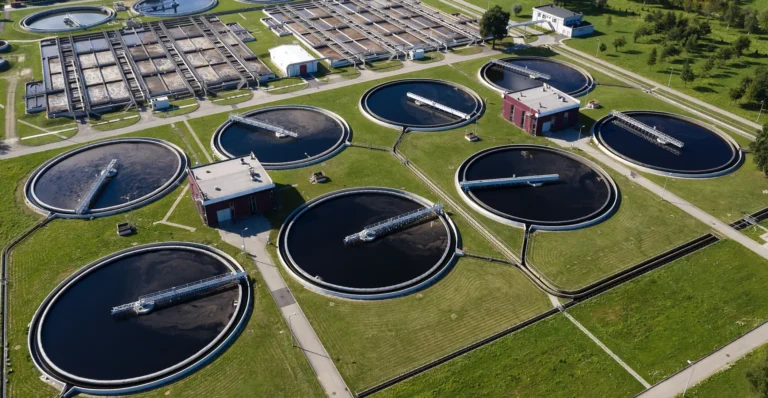
Water resources and water quality are closely linked to population growth and economic growth. Today’s wastewater treatment plants are often